Surface Integrity of Cemented Carbide After Wire EDM Machining
Meta description : Wire EDM cuts hard carbide cleanly — and leaves a thin damaged layer behind. What that recast layer does to part life, and when post-processing matters. (~148 chars)
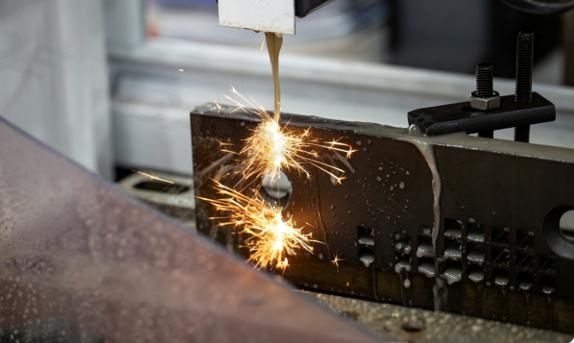
Wire EDM is the go-to method for shaping complex carbide profiles. It cuts ultra-hard material without heavy mechanical force, and the finished part looks dimensionally perfect. The problem sits just below the surface.
Each spark melts and re-solidifies a thin layer on the cut edge. That recast layer is not the same material as the bulk carbide. Cobalt binder redistributes unevenly, and microcracks form as the molten skin cools. Under a visual check the edge is clean; under a microscope it is already damaged.
These defects stay quiet until the part is loaded. In a sealing ring or a wire drawing die under cyclic pressure, the tiny cracks grow, and failure shows up as unexpected chipping or a leak — months after the part passed inspection.
How bad the layer is depends on the EDM parameters. High pulse energy cuts fast but leaves a thicker, more defective skin. A gentler finishing pass leaves less, yet even a light recast layer can shorten service life in high-pressure service.
For carbide parts that must hold a seal or a dimension under load, a final grinding or polishing pass to remove the recast layer is often the difference between a component that lasts and one that fails early.
When sourcing EDM-finished carbide, treat surface condition as a specification, not a side note. Dimensional tolerance tells you it fits; surface integrity tells you how long it will hold.